Crime Families as a Case Study: The Ahmad Clan
Download

On the modern battlefield, combat is not only conducted through military strikes but also through images, videos, and, especially, narrative design. In recent years, the battle over public perception has become a central component of conflicts between states and terrorist entities, as they seek to

For years, the debate over Hezbollah has been accompanied by a central question: Is it a Lebanese organization operating in the interests of the state and the Shiite community, or an Iranian branch that primarily serves Tehran’s regional strategy? The organization itself has cultivated deliberate

Are the forces of Abu Mohammad al-Julani, the leader of Syria, planning to invade Lebanese territory to exact revenge on Hezbollah? This potential move is viewed either as retaliation for Hezbollah’s involvement in the Syrian Civil War or as part of a strategic deal orchestrated with

In recent days, there has been a noticeable escalation in the scope of Hezbollah’s attacks against northern Israel, including the use of drones, anti-tank, and rocket attacks. At the same time, the organization has issued evacuation notices to residents of Israel’s northern communities, using wording

On February 6, Wafiq Safa, a veteran senior commander in Hezbollah, stepped down from his position as head of the organization’s “Liaison and Coordination Unit” (it remains unclear whether he resigned or was dismissed). While some observers view this as a dramatic development signaling a

Against the backdrop of rising tensions between the United States and Iran, reflected in the buildup of U.S. military forces in the Middle East, al-Qaeda is calling for a jihadist war against the American presence in the region and for halting what it describes as

A European Union’s designation of Iran’s Islamic Revolutionary Guard Corps (IRGC) as a terrorist organization is mainly declarative but carries legal and deterrence implications. Until now, enforcement largely depended on U.S. sanctions, with European compliance shaped by extraterritorial exposure rather than EU law. The designation

There are two central and plausible short-term scenarios on the Iranian front: A possible U.S. strike on Iran could lead to renewed domestic protests focused on regime change. In such a case, Iran could carry out retaliation against Israel and neighboring states in the Gulf.

While Hezbollah’s rhetoric is becoming increasingly radical and loyal to Iran and the “Axis of Resistance,” the organization itself is acting with caution and restraint. Behind the militant declarations stands an actor under growing political pressure in the Lebanese arena, required to navigate between its

The joint U.S. and Israeli operation “Epic Fury / Roaring Lion” (February 2026) signifies a definitive shift in modern warfare, moving Artificial Intelligence (AI) and cyber capabilities from elective support to core structural components of campaign design. This evolution suggests a new paradigm where computational

Introduction This paper argues that Hezbollah’s decision to join the renewed 2026 war with Israel is neither a simple act of “axis discipline” nor just an automatic extension of its traditional resistance role, but the product of a narrowing strategic corridor shaped by three forces:

Abstract This report analyzes Iran’s information warfare during the December 2025 – January 2026 protests and its parallel influence efforts targeting Israel and the West. Facing widespread economic unrest, the regime used physical repression and a coordinated narrative campaign, labeling demonstrators as agents of the

Download Abstract This paper analyzes Iran’s operational strategy during the current conflict, arguing that Tehran has adopted an influence-centric approach in which cognitive effects are prioritized over conventional military outcomes. Facing clear limitations in its ability to confront the combined military capabilities of Israel and

During March 2026, a series of attacks and antisemitic incidents targeting Jewish and Israeli sites were recorded worldwide, alongside foiled plots and arrests indicating ongoing intentions to carry out additional attacks. In Europe, several explosive attacks were carried out. On March 9, an explosive device

Abstract This paper examines the ideological and psycho-political mechanisms through which the Islamic Republic of Iran maintains its political legitimacy, sustains social cohesion, and ensures regime durability. The analysis shows how religion, nationalism, economic monopolies, media control, institutional infrastructure, and militarized mobilization function in a

Fawaz Clan Case StudyDownload This research was conducted with the generous backing, expertise, and funding of CENTEF (Center for Research of Terror Financing). We extend our sincere gratitude for their comprehensive support of this project. This research was made possible through the support of 240 Analytics

Abstract On March 28, the Islamic Republic of Iran held its annual Ruz-e Jehani-ye Quds (henceforth: Quds Day) ceremony to express the nation’s support for the Palestinians. Iran makes notable efforts to commemorate this event, mobilizing its citizens to flood the streets in a manifestation

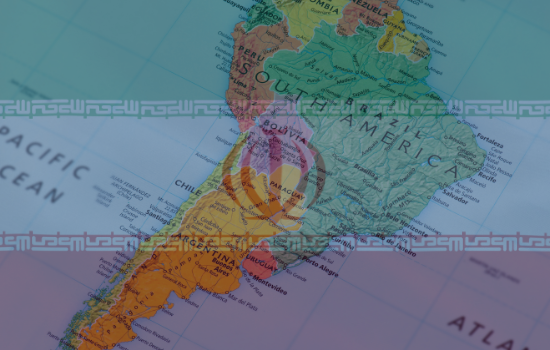
Abstract The International Institute for Counter-Terrorism at Reichman University published several studies emphasizing Iran’s infiltration and the formation of terrorist cells and networks throughout Latin America. This research explores an additional approach by which the Iranian mechanism functions, utilizing many sources of influence and public

Abstract This paper examines the intensifying threats posed by Iran’s expanding influence in Jordan, presenting significant security implications for both Israel and Jordan. Against the backdrop of Israel’s recent operations against Hamas in Gaza and the West Bank, the study explores two primary dynamics shaping

Abstract This paper explores the evolving alliance between the Iranian regime and al-Qaeda, a relationship that has gained strength following the appointment of Sheikh Seif al-Adel as al-Qaeda’s leader after the assassination of Sheikh Ayman al-Zawahiri. The paper examines the implications of this alliance for

Abstract This paper delves into the increasing criticism among Lebanese Christians regarding Hezbollah’s involvement in the ongoing conflict against Israel, highlighting the mounting discontent not only from Christians but also from Sunnis and Shiites in Lebanon. The criticism underscores the detrimental impact on Lebanon’s stability

Abstract This article examines the long-term efforts made by Ayatollah Ruhollah Khomeini to create revolutionary opposition to the rule of Shah Mohammed Reza Pahlavi, while exploiting the evolving relations between Iran and Israel as a blueprint for his proclamations. Khomeini’s anti-Israel policies had both anti-

Since the 1979 Islamic Revolution, Iran has actively sought to establish itself as a key player both in the Middle East and on the global stage. This ambition has been largely shaped by its antagonistic relations with the United States and Israel, along with critical

Since 9/11 attacks Iran became a safe haven for senior al-Qaeda members as well as a hub for terror activity planning, fund raising, recruiting and more, especially for Sheikh Saif al-Adel, al-Qaeda’s current leader. Al-Adel, that apparently rose to power after the killing of Ayman

Defense Minister Yoav Gallant warned on April 20, 2023, that Israel would likely no longer see limited conflicts on single fronts, but rather would have to face a multi-front escalation in the near future. Defense Minister Galant’s warning proved to be correct and Israel is

The Houthi rebels in Yemen, with Iran’s support, have intensified hostilities by targeting Israel with missiles and drones, signaling their alignment with Hamas, Hezbollah, and other Palestinian resistance groups. Since October 19, 2023, they have attacked Israel multiple times, with interceptions by the USS Carney,

Recently Belgium reached a shameful deal with Iran: an innocent Belgian aid worker, Olivier Vandecasteele, held for 455 days in Iran on fake charges of spying, was swapped for an Iranian intelligence officer, Assadollah Assadi, convicted to 20 years in prison for orchestrating together with

The ongoing protests in Iran, which began following the death of Mahsa Amini, present a significant challenge to the post-revolutionary regime. The protests have not diminished despite violent suppression efforts by the establishment, and there are several distinguishing features of the current unrest compared to

This article argues that the Iranian regime successfully uses a terrorist blackmail strategy since the 1979 hostage saga of American diplomats at the US Tehran embassy, the bombings against the US Marines and French paratroopers of the Multinational Peace Force in Beirut in 1983, the

Over the past decades, Hezbollah has built a well-oiled, multi-billion-dollar illicit finance and drug-trafficking machine in Latin America that launders organized crime’s ill-gotten gains through multiple waypoints in the Western Hemisphere, West Africa, Europe, and the Middle East, generating hundreds of millions of annual revenues.

Hassan Nasrallah and Hezbollah’s threats on Karish gas drilling rig and prevent the production and export of gas from Israel’s reservoirs if Lebanon’s demands regarding the latter’s marine border with Israel constitute a significant escalation in Hezbollah’s aggressive rhetoric and may lead to another miscalculation

Since the end of the last century, Latin America has been a prominent area in which Iran has sought to expand its influence and scope of action. From drug smuggling to money laundering, from fundraising to recruitment and proselytism, even terrorist attacks, Iran-related activities in

One of the major areas terrorist organizations operate to influence their enemy’s public opinion ispropaganda. This war is being waged via traditional media and social media. The last two rounds ofhostilities in Gaza Operation Protective Edge (2014) and Guardian of the Walls (2021) manifested theimportance

Cyberspace has become one of the main arenas for state warfare. It is also largely used by non-state actors or state sponsored actors, including criminal networks and terrorist organisations. In recent years, their operations in cyberspace have become a real challenge for global security. Throughout

Hezbollah leader Hassan Nasrallah’s coughing speech on May 25, 2021, and especially the long absence that preceded it, raised quite a few question marks as to his health condition. Hezbollah claims that this is an insignificant allergy or medical defect and there is no basis

The deep Russian military involvement in Syria is slowly leading to a de facto restructuring of Middle Eastern alliances, putting America’s influence at risk, and Israel’s interests at stake. First published in Haaretz

Introduction On December 28, 2025, protests erupted in Iran and rapidly expanded to additional cities and regions across the country. This wave of unrest is marked by heightened intensity and an unusually broad geographic scope. Although the immediate collapse of the regime appears improbable, the

During my participation at the International Seminar for the Combat of Terrorism and the Financing of Terrorism in Buenos Aires, Argentina on November 30, 2016, I presented a short evaluation about the terrorism threats coming from the Middle East.

On June 17th 2020, the U.S. Government started implementing several aspects of the Caesar Syria Civilian Protection Act of 2019. The purpose of this Act is to make Syrian President Assad’s regime accountable for its atrocities during the ongoing Syrian Civil War, while at the same

The major questions regarding the causes, and responsibilities, of the catastrophic explosion relate to the origin and destination of the ammonium nitrate cargo and the reasons that led to its storage in the Beirut port for six years.

Today, the Middle East remains vital for the realization of Russia’s interests in the southern part of its post-Soviet territories. This article discusses Iran and Hezbollah in the context of Russia’s tactical and strategic considerations and foreign policy interests in the Middle East.

Last year, after deserting the Iranian-led “axis of resistance” and positioning itself in the Sunni coalition against the Assad regime in Syria, Hamas lost the backing of the short-lived Muslim Brotherhood government in Egypt and incurred the bitter enmity of the new military rulers in

Since the end of the Iran-Iraq war and the death of Khomeini, Iran has been in a state of internal struggle for the continuation of the Islamic Republic. The first stage of the struggle was waged between the “conservatives” and the “reformists”.

Civil Society Organizations: Non-Traditional Actors in the Process of Radicalization Prof. Gerald M. Steinberg and Olga Deutsch[1] In the ongoing attempts to disaggregate and understand the complex array of factors contributing to the rise of terrorism, “radicalization” has become a generalized and often catch-all

The Iranian Revolutionary Guard Corps (IRGC) was established soon after the establishment of the Islamic Republic in 1980 and was composed of the same groups that led the revolution. There were two central reasons for the establishment of the IRGC. First, it was designed to defend

Since the Islamic Revolution in 1979, Iran has been acting in any way possible to promote its interests in the Middle East, including the expansion of its sphere of influence within the Shiite communities, whom it has been able to harness to its needs. This