The Sahel continues to be the main hotbed where radical Islamic terrorist groups thrive
Introduction
Terrorism is a major and immediate threat to parts of the world in general and Africa in particular, which bears the brunt of its consequences every day. Among the regions most affected by radical Islamic terrorism is the Sahel, which has become, over the past decade, a hotbed of radical Islamic terrorist activity combined with illegal criminal activities such as human trafficking, drug, and arms smuggling, kidnapping for ransom, and trafficking in precious minerals. Terrorism in the Sahel is fueled by a wide range of factors, such as political instability, economic insecurity, weak security systems, climate change, ethnic and tribal rivalries, and so on. According to the 2024 Global Terrorism Index by ACLED (Armed Conflict Location and Event Data), the Sahel recorded more than half of the world’s deaths from terrorism.[1] Of the total 7,555 victims, 3,885 were recorded in this region, accounting for 51% of the human losses caused by attacks. This observation reflects a change in terrorism, which is gradually moving away from the Middle East and intensifying in West Africa. This dynamic is particularly visible in some countries in the Sahel, where insecurity is worsening year by year.
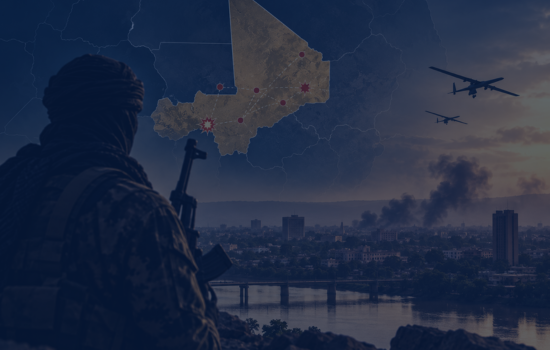
For the second year in a row, Burkina Faso is the country most affected by terrorism, with 1,532 deaths in 2024. While this figure has decreased slightly from 1,935 deaths the previous year, the threat remains persistent. Mali, which was in third place in 2023, is now in fourth place with 604 deaths. Niger, for its part, has recorded the highest increase in the number of victims, making it another hotbed of terrorist violence in the region.[2]
Terrorist attacks are mainly carried out by two armed groups: the Al-Qaeda-affiliated Jama’a Nusrat ul-Islam wa al-Muslimin (JNIM) and the Islamic State in the Sahel, the Islamic State in the West African Province (ISWAP), which is linked to ISIS. Despite their ideological differences and alliances, these organizations coexist in the vast Sahel, leading deadly attacks against security forces and civilian populations. The 2024 report also highlights that the deterioration in the security situation in the Sahel is linked to the political upheavals (military coups) that have characterized the countries of the region in recent years. Regime changes in Burkina Faso, Mali, Niger, Chad, and Guinea have led to a redefinition of strategic alliances, marked by a complete disconnection from Western partners (France and the United States) and a rapprochement with other powers such as Russia and China. This positioning has contributed to the reconfiguration of security efforts and, in some cases, has left gaps that have been exploited by radical Islamic terrorist groups to expand their influence in the areas they control and to spread westward towards the Gulf of Guinea countries. As mentioned, there is an increase in terrorist attacks targeting state infrastructure and law enforcement agencies, as is happening in Mali and Niger. However, it is striking that the countries concerned are not developing in-depth strategies to deal with the threat, whether in terms of military operations at the state level or through interstate cooperation or attempts to reintegrate former fighters from various militias and organizations into society.
The challenges facing the governments of the region are enormous. It is now known that an effective fight against terrorism requires, on the one hand, strengthening military capabilities, mobility, and real-time intelligence alongside increasing regional cooperation, and on the other hand, it also requires, at the same time, socio-economic and cultural considerations to deal with the root causes of the prosperity and flourishing of violent extremism.
The Islamic State, a continuing threat
After carrying out a number of high-profile attacks and establishing a caliphate in parts of Iraq and Syria between 2014 and 2019, the ‘Islamic State’ (ISIS) has disappeared from many radar screens. The immediate question is: Is the Islamic State a continuing threat?
To answer this, one must be careful. It seems that in the territories of Syria and Iraq, the Islamic State, as a physical political entity, has been defeated.[3] The ideology certainly has not, and therefore, it must be assumed that there are two. These countries are isolated ‘pockets’ of ISIS followers. Caution is warranted by the very attempt to define that victory has been achieved over the Islamic State.
A number of main arguments can be cited that support the idea of inflicting a severe defeat on the Islamic State: 1) the loss, apart from a few residual pockets, of the vast territory it had occupied on the Iraq-Syria border (95% at the beginning of 2019); 2) the elimination of a significant part of its leadership and militants (including al-Baghdadi himself, who was killed in 2019 in a US operation in Syria); 3) the relative inefficiency of the government established in the caliphate; 4) the lack of real support from the populations that lived under its rule, who suffered massive violence and persecution under ISIS and then during the reoccupation by the liberating forces; 5) when ISIS had a physical base in the form of the caliphate in Syria and Iraq – it was able to attract recruits who could fly to Turkey, take a bus to the border and secretly enter Syria; 6) the loss of the conquered territories and civil wars have reduced the recruitment pool of the ISIS group, and the foreign support that was essential to it is no longer there – which has reduced the organization’s strike power.
The ISIS ‘caliphate’ project, which was at its peak in 2014, was doomed to failure because the ISIS organization was in open conflict with all regional and international powers. Thus, it can be stated that the ‘caliphate’ was destroyed, but the Islamic State did not disappear.
Despite the military defeat, the Islamic State has demonstrated extraordinary adaptability and perseverance. The group has moved from a centralized territorial structure to a more clandestine network of decentralized cells operating mainly in sub-Saharan Africa, which are still capable of orchestrating and instigating attacks around the world.
As early as 2011, Abu Bakr al-Baghdadi began to disperse some of the group outside its Iraqi stronghold, deploying jihadists in Syria and then across Africa, with the aim of recruiting and training more local fighters. He established financially autonomous branches for the organization that were able to interact with local support to establish their long-term presence, when the time came.
Throughout the days of the caliphate, local and Western failure to address the root causes of violence and the flourishing of the organization and the joining of young people from all over the world led to the establishment of overt and covert networks around the world and the association of the caliphate with separatist/subversive groups, Islamic, on the African continent, in Afghanistan, in the Philippines and more. By 2025, ISIS will have nearly 15 affiliates around the world, in the Middle East, Central Asia, and sub-Saharan Africa.
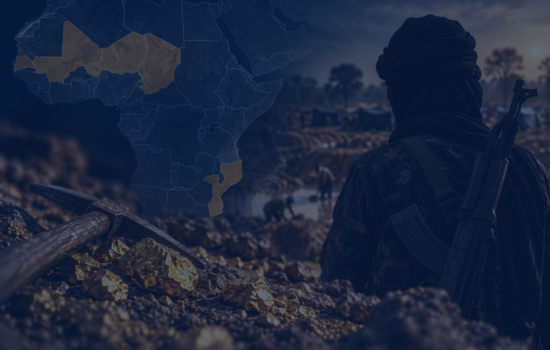
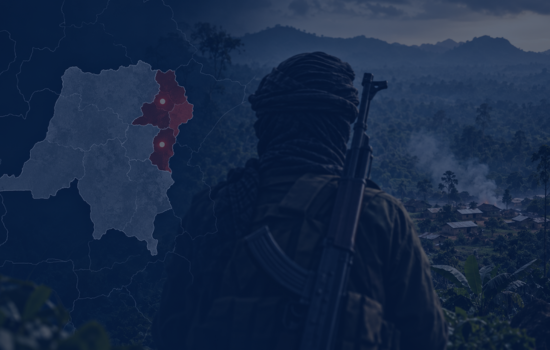
The Islamic State’s operations have been relocated to peripheral areas, also known as Wilayat (provinces) in West Africa; the Islamic State in the Greater Sahara Group (ISG) has expanded its control over parts of Burkina Faso, Mali, and Niger. By 2024, ISIS had at least five affiliates in sub-Saharan Africa: the Islamist rebels of Ansar al-Sunna in Mozambique, the Islamic State West Africa Province (ISWAP) comprising former Boko Haram jihadists active in northeastern Nigeria and the Lake Chad region, and the Islamic State affiliates in Somalia and Central Africa in the Democratic Republic of Congo.
ISIS now appears less threatening than it was at its peak. But terrorist attacks like the 2021 attack by ISIS-affiliated groups on the al-Sina prison south of the Syrian city of Al-Hasakah to free other militants.[4] The ensuing battle with the Syrian Democratic Forces (SDF, a Kurdish militia in the northeast backed by the US) lasted ten days and left more than 500 dead.
In March 2024, the group’s South Central Asian affiliate, the Islamic State Khorasan Province (ISKP), attacked the Crocus City Hall concert hall in Moscow, Russia. [5]This incident highlighted ISIS’s ability to strike far beyond the Middle East. It is a stark reminder that despite the loss of its caliphate, the group remains a potent threat that continually seeks to project power and sow fear around the world.
The branches and networks of the Islamic State in the Sahel countries, Mozambique, the Democratic Republic of Congo, and Nigeria, are particularly active, carrying out terrorist acts against civilians and security forces. Their path is quite easy due to the removal of the military presence of external forces in their areas of operation and the weakness of local armies, along with the lack of real administrative control over vast areas held by various criminal and rebel groups that could become new bases for terrorist organizations. Thus, the Islamic State and al-Qaeda continue to expand their spheres of influence and find the most important thing for a terrorist organization – sources of funding.
As early as 2022, in its newsletter (ISIS Al-Naba editorial of June 16, 2022), ISIS identified Africa as a territory where it would likely succeed in re-establishing the ‘territorial caliphate.’ In that article, it recommended ISIS encourages its followers, who have not previously made the Hijra (migration) to Iraq, Syria or elsewhere, to strive to ‘move’ to their brothers in Africa, because today it is the land of Hijra and Jihad. [6]
It is also worth noting the ideological aspect of ISIS’s activities in Africa, according to which they can claim that they are not only fighting the governments of ‘infidels’ among Muslims themselves but also spreading Islam in new territories that are under the control of non-Muslim governments. Additionally, ISIS might attract new Muslims as sympathizers. Furthermore, several ISIS branches in Africa are putting in place an effective administrative structure that draws in locals who are dissatisfied and estranged from their governments because they lack administration. Therefore, large areas of the continent with weak government control and a lack of governance make Africa in general, and sub-Saharan Africa in particular, an attractive region for the spread of ISIS and al-Qaeda.
Big differences of opinion between the countries themselves, as well as with European countries and the United States, reduce the effectiveness of measures to thwart radical Islamic terrorism and its spread. The periphery of sub-Saharan Africa provides terrorist organizations with an opportunity to establish themselves, in contrast to the Middle East and North Africa, which are much more integrated with Europe.
One can expect, for example, that ISIS’s operations in sub-Saharan Africa will focus on conquering territories to create a caliphate.
[1] Conflict intensifies and instability spreads beyond Burkina Faso, Mali, and Niger
The 2025 Global Terrorism Index (GTI) reveals a disturbing reality. The Sahel now accounts for more than half of the world’s terror-related deaths. The region, weakened by years of conflict, is a breeding ground for jihadist groups. The number of countries affected by attacks has increased from 58 to 66 in one year. Five of the ten most affected countries are in the Sahel, reflecting the intensity of the crisis. Burkina Faso, despite a slight decrease in attacks, remains the most affected country. Mali and Niger are experiencing a rise in extremist groups. Nigeria, meanwhile, is battling ongoing threats from Boko Haram and the Islamic State in West Africa Province (ISWAP).
See Link: https://www.visionofhumanity.org/maps/global-terrorism-index/#/
[2] Africa’s Constantly Evolving Militant Islamist Threat
https://africacenter.org/spotlight/mig-2024-africa-constantly-evolving-militant-islamist-threat
[3] As you may recall, ISIS was initially the branch created by al-Qaeda in Iraq, led by Abu Musab al-Zarqawi, following the overthrow of Saddam Hussein in 2003 and the occupation of the country by the US. Taking advantage of the Syrian conflict since 2011, ISIS has strengthened its propaganda apparatus and attracted new jihadist fighters, mainly from the North Caucasus (Chechnya, Dagestan, Ingushetia). As it expanded, the group changed its name to the ‘Islamic State’ and in June 2014 declared a ‘caliphate’ over a vast territory stretching from northeastern Syria to northern Iraq, where it imposed sharia law. Its founder, Abu Bakr al-Baghdadi, became the ‘caliph’. The re-establishment of this Islamic and totalitarian system, which had disappeared almost a century ago, immediately aroused fear in the West. An international coalition was gradually formed and the bulk of the ‘caliphate’ was recaptured in 2017 (mainly the two recognized capitals of Mosul in Iraq and Raqqa in Syria).
[4] A closer look at the ISIS attack on Syria’s al-Sina Prison
https://www.mei.edu/publications/closer-look-isis-attack-syrias-al-sina-prison
[5] Islamic State’s deadly Moscow attack highlights its fixation with Russia
[6] Hijra And Jihad: What Islamic State’s Call for Migration Means for Terrorism in Africa