ADF Spreads in Democratic Republic of Congo
Introduction
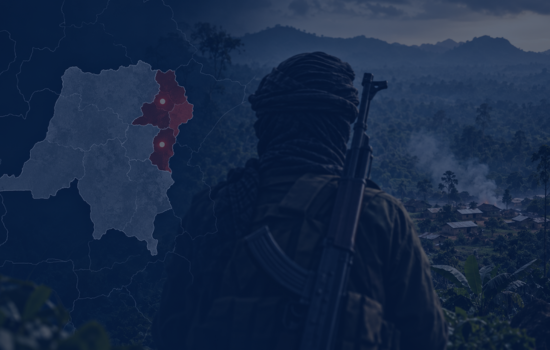
For the first time, residents of the Tshopo and Haut-Uélé districts of the Democratic Republic of Congo (DRC) are reporting attacks attributed to the ADF (Allied Democratic Forces), a clear and worrying sign of the spread of the extremist Islamic terrorist group in the Democratic Republic of Congo.[1] Attacks attributed to the ADF rebels are therefore no longer limited to the provinces of North Kivu and Ituri, where they usually operate.[2] This radical organization, which originated in Uganda, has expanded its terrorist activities to neighboring provinces in the northwest of the country. [3]
In fact, since 1998, the Democratic Republic of the Congo has been engaged in an endless war against the ‘Allied Democratic Forces’. In this article, I will discuss the development and spread of the organization and the threats it poses to the Democratic Republic of the Congo and the entire region, Central and Southern Africa, due to its affiliation with the Islamic State.
From a Ugandan internal rebellion to a jihadist hydra.
The ADF was founded in Uganda in 1995, initially as an Islamist coalition that opposed the Ugandan regime. The group is affiliated with the Islamic State and is known for carrying out brutal attacks against local civilians.
The organization was initially founded in 1988 in Uganda as the NALU (National Army for the Liberation of Uganda), by radical Muslim fighters who opposed the government of President Yoweri Museveni.
They were led by politician Amon Bazira, who exploited the events of the Rwenzururu movement to advance his political goals in Uganda. [4]
The organization was defeated by the Ugandan army in 2001 and was forced to move its activities across the border to eastern Democratic Republic of Congo, where in 1995 the Allied Democratic Movement and the Uganda Muslim Liberation Army and the Tablighi movement, led by Jamil Mukulu, merged to form the ADF. [5]
The organization was quickly pushed towards eastern Democratic Republic of Congo, where its fighters found refuge, settled and changed their ways. They did not disappear, but rather grew stronger, gradually abandoning their initial political struggle (against the Museveni regime in Uganda) in favor of a transnational jihadist project.
In April 2019, the Islamic State Defense Army was officially recognized as an organization affiliated with the Islamic State, within the framework of ISCAP (Islamic State – Central Africa Province).[6] A public admission of responsibility for the assaults validated this association, which had been covertly formed since 2017. This profoundly changed the organization’s strategy, its structure, and above all, the level of threat it posed. The Islamic State Defense Army is no longer just a local armed group; it is now a significant regional terrorist actor. Given the scale of the organization’s violence, the Congolese state has launched several military campaigns: “Mountain Sweep” in 1998, “Safisha Ruwenzori” in 2005, “Strike Ready” in 2010 (Radi Strike), in 2014 “Keba I”, in 2015 “Sukola I” and in 2021 “Shujaa”. These operations, documented in Professor Jaribu Muliwavyo’s thesis “Radicalisation et extrémisme violent en RDC”, demonstrate continuity in Congolese military involvement. [7]
During the military operations, leaders were neutralized, hideouts were destroyed, and several cities were recaptured. But each time, the ADF forces survived, recovered, adapted, and changed locations from which they renewed their attacks.
The familiar cycle: attack, retreat, reawakening. However, the threat remained the same. The effectiveness of the operations remained limited in time and scope.
Cooperation with the Islamic State
The ADF currently operates with structural support from the Islamic State (ISIS), mainly through Maktab al-Karrar, a coordination and financing office linked to the Somali branch. [8] The group is resilient and even scalable because of the logistical, human, and ideological resources this network offers. [9]
The ADF has local networks, the ability to recruit in remote areas and a terrorist strategy that allows them to maintain the initiative on the ground. Their capabilities are evolving, but they are not going away.
The Congolese state did not remain motionless in the face of the ADF’s expansion; instead, it took appropriate action. Military resources were deployed, cooperation with Uganda was strengthened, intelligence services were involved and sensitive areas were secured. In the short term, some results could be seen, notably a reduction in attacks in a number of targeted areas.
However, the threat persists since it is not limited to the military domain. Without a complete strategy that incorporates soft power, the situation will stay the same as long as the response is restricted to kinetic force.
The DRC cannot win this war alone, and not just with weapons
The fact is, 28 years after the first attacks, the threat from the ADF remains the same. The Congolese army’s operations Mountain Sweep, Safisha Ruwenzori, Radi Strike, Keba I, Sukola I and Shujaa – from the past – were not enough.
The ADF’s resilience is concerning because it highlights an uncomfortable reality: the existing strategy is still insufficient. Without more comprehensive action, the Armed Forces of the Democratic Republic of the Congo (FARDC) will continue to represent one of the most serious security and humanitarian threats in the region. If the response remains military-only, without involving unemployed youth and local communities, and without addressing the roots of radicalization, the Democratic Republic of the Congo risks becoming even more entrenched.
Modus operandi of the organization
The organization’s activities are mainly based on operations in the remote mountainous terrain of the North Kivu and Ituri provinces.[10] The organization’s fighters are accused of killing thousands of civilians using machetes, knives and guns during night raids on villages. The organization also engages in mass kidnappings for ransom and recruitment. The leaders of the group have no qualms about using the abducted people as wives, slaves, or sex slaves. Beyond their dire and devastating humanitarian consequences, the organization’s activities are also ‘fueled’ by competition for territorial influence and control over the region’s vast natural resources, including gold and strategic minerals concentrated in the North Kivu and Ituri provinces.
The ADF adheres to radical Islamic ideology. If they have the opportunity to expand their realm anywhere, they will do so. For them, this is a war of religion and faith, they will enforce Sharia law wherever they rule. Of course, the organization needs funding, which is why they are trying to take over mining sites.
Cooperation with the M23 Movement – The Indirect Implications
A 2024 report by UN experts notes informal links between the ADF and the M23 movement, which aims to overthrow the current Congolese government and receives assistance from neighboring Rwanda.[11] Rwanda supports the M23 rebel group in eastern Democratic Republic of Congo (DRC) to secure economic control over mineral-rich areas, protect ethnic Tutsi populations, and fight hostile militias linked to the 1994 Rwandan genocide, despite official denials documented by the United Nations. [12]
The information regarding the cooperation between the organizations does not establish an operational alliance, but it raises questions about the armed organization’s ability to develop new partnerships and expand its influence in eastern Democratic Republic of Congo. The data suggests indirect operational overlap: the attacks. The territoriality of the M23 movement diverts the resources of the Congolese army, inadvertently creating security spaces that allow the ADF, affiliated with the Islamic State, to expand its operations.
David Doukhan Ph.D.
18.8.2026
[1] Eastern DRC: Christians Under Attack by Islamic State-Affiliated ADF
Tshopo Region: Located in the north-central part of the country. Its capital is Kisangani, and it is characterized mainly by a tropical rainforest climate. It borders Haut-Uélé to the north. Haut-Uélé Region: Located directly to the northeast, it borders South Sudan and the Central African Republic to the north, and Tshopo to the south. Its capital is Isiro.
[2] The organization is active in Beni Territory (North Kivu): a historical main stronghold and frequent site of rebel activity and attacks against civilians. Lubero Territory (North Kivu): A nearby area where the group has increasingly expanded its footprint and launched raids. Ituri Province: Areas along the border with North Kivu Province, where cells have dispersed to evade military pressure.
[3] IS-linked group kills at least 13 in Congo village
https://apnews.com/article/congo-adf-attack-islamic-state-group-9aa74dd808f76180ab00046f7943e358
[4] The Rwenzururu Movement was an armed separatist and protest movement that operated in southwestern Uganda from 1962 to 1982. Led by Isaiah Mukirania, it was formed by members of the Bakonzo and Baamba ethnic minorities to fight against political oppression and discrimination by the dominant Batooro leadership in the Toro Kingdom.
For more:
Martin Doornbos, The Rwenzururu Movement in Uganda: struggling for recognition (Routledge, New York, 2017).
[5] The Tablighi Movement, or Tablighi Jamaat, is a global grassroots Islamic revivalist movement. Founded in 1926 by Islamic scholar Maulana Muhammad Ilyas Kandhlawi in India, its primary goal is to encourage Muslims to return to strict religious precepts, core moral values, and the practices of the Prophet Muhammad.
Jamil Mukulu is a Ugandan militant leader and suspected war criminal, who was the principal founder and former leader of the Allied Democratic Forces. Mukulu was arrested in Tanzania in 2015 and is currently awaiting trial in Uganda on charges including murder and crimes against humanity.
[6] In 2016, the organization pledged allegiance to the Islamic State (ISIS), and later became known as the Islamic State’s Central Africa Province (ISCAP).
[7] Years of war, six military operations and still the same threat27
See also Jaribu Muliwavyo’s book
La guerre des ADF dans le Ruwenzori (Univ Européenne, 1.7.2018).
[8] Maktab al-Qarar is a critical regional administrative and economic center for the Islamic State (IS). Located in the Puntland Mountains of Somalia, the office serves as a central hub responsible for coordinating funding, logistical support and tactical guidance for IS affiliates across Africa – most notably the Allied Democratic Forces (ADF) operating in the Democratic Republic of Congo (DRC).
The support between Maktab al-Qarar and the ADF is provided through several channels: Terrorist financing and money laundering
The al-Qarar office actively collects millions of dollars each year from extortion, piracy networks and business fronts in Somalia and South Africa. Under its management, funds are transferred across borders through a highly sophisticated network of networks that includes South Africa, Tanzania, Kenya and Uganda, before ultimately reaching the ADF in eastern Congo.
The office uses traditional regional hawala systems, mobile money platforms and increasingly virtual assets such as Bitcoin to disguise transactions from banking regulators. Hawala is an old, informal money transfer system. It operates without regular banks. The money passes through a trusted network of intermediaries called hawaladars, and no physical cash actually crosses borders.
What is hawala? Ancient money transfer system now under federal investigation
Beyond cash, Maktab al-Karar serves as a coordination cell that facilitates the movement of foreign fighters, trainers, and tactical advisors directly into ADF camps. This direct support has historically helped the ADF upgrade its lethality, improve its improvised explosive device (IED) designs, and conduct operations in Ituri and North Kivu provinces.
Maktab al-Karar oversees the production and alignment of the ADF’s communications strategy with the core ISIS propaganda. This effort has transformed the local Ugandan rebel movement into a global jihadist enterprise under the name Madina at Tauheed Wau Mujahedeen, allowing them to claim attacks around the world under the ISIS banner.
[9] Allied Democratic Forces: The Ugandan rebels working with IS in DR Congo
https://www.bbc.com/news/world-africa-57246001
[10] Democratic Republic of the Congo: “I’d never seen so many bodies”: War crimes by the Allied Democratic Forces in the eastern Democratic Republic of Congo
https://www.amnesty.org/en/documents/afr62/0860/2026/en
[11] The March 23 Movement (M23) is a Tutsi-led military rebel group operating in the mineral-rich eastern provinces of the Democratic Republic of the Congo. The group takes its name from a peace agreement of 23 March 2009 that ended a previous rebellion by a previous militia, the National Congress for the Defence of the People.
[12] Why Rwanda supports M23 rebels in DR Congo’s conflict
https://www.dw.com/en/why-rwanda-supports-m23-rebels-in-dr-congos-conflict/a-68332741
Focusing on M23 allows ADF insurgents to expand in eastern DRC
https://issafrica.org/iss-today/focusing-on-m23-allows-adf-insurgents-to-expand-in-eastern-drc