Africa’s Gold Resources are Tempting Targets for Jihadists
Introduction
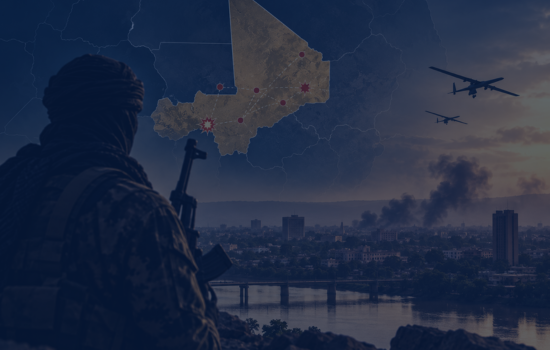
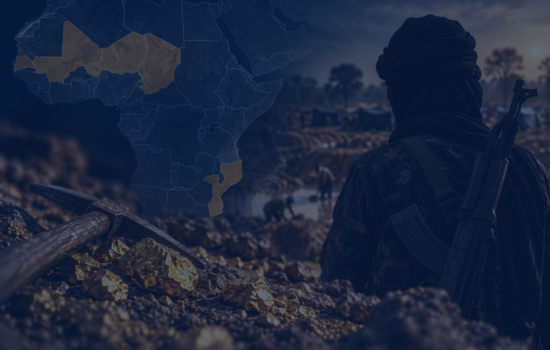
Extortion, taxation, and control over artisanal gold mining sites are the main ways that militant Islamic groups in Africa finance their operations, especially in the Sahel and portions of East and Southern Africa. [1]
Key groups involved include:
The JNIM (Jamaat al-Nusra al-Islam wal-Muslimeen), an al-Qaeda-affiliated coalition that is the dominant extremist actor exploiting the gold sector in Mali, Burkina Faso and Niger. [2]
Islamic State affiliates, such as the Islamic State Sahel Province (ISSP) and the Islamic State Mozambique (ISM). [3]
According to a recent report by the conflict monitoring organization ACLED dated July 22, 2026, Islamic terrorist organizations are increasingly focusing on roads, villages, and commercial locations within 10 kilometres of mines in the Sahel.[4]
According to the report, radical Islamic groups are competing for control of mining areas and using extortion to finance their operations. [5] As militant groups expand into new territories, violence often spreads beyond the mines, affecting routes, communities and economic activities related to mining. Given that the military junta in Burkina Faso has the least territorial control, it is not surprising that Burkina Faso It is the country in the Sahel with the highest number of mining-related violence incidents – 75% of those documented by ACLED between January 2015 and June 2026, compared to 15% in Mali and 10% in Niger.
By 2025, Burkina Faso’s share had fallen to 54%, while Mali and Niger accounted for 29% and 18% of the incidents recorded, respectively. This change does not reflect a decline in mining-related violence in Burkina Faso, but rather indicates a growing spread of mining-related conflicts across the central Sahel.
Particularly, artisanal mining regions are centers of economic activity, mobile people, transit connections, equipment, and commercial supply lines that might aid armed groups in their operations. Control of a mining area allows Islamic terrorist groups to generate revenue not only through taxation and extortion of protection payments, but also creates opportunities to recruit fighters, gather intelligence, and establish influence and enforcement of strict Islamic law—Sharia. Mining areas are invaluable as multi-purpose spaces for terrorist groups to support their operations, governance, and armed logistics.
In some areas, JNIM has transformed artisanal mining sites into semi-permanent bases where fighters can switch between civilian and combat roles, blend in with miners, store weapons and equipment, and conduct operations with a lower risk of detection.
Gold profits are channeled to purchase weapons, ammunition, and materials such as ammonium nitrate used to make improvised explosive devices (IEDs). Mining activities can also provide access to materials of operational value, including commercial explosives, detonators, drones, fuel, and motorcycle spare parts.
The conflict surrounding mining seems unlikely to remain confined to the central Sahel, as terrorist groups make a sustained push to encircle countries in coastal West Africa.
The possibility that patterns previously seen in the central Sahel would expand further south into coastal West Africa is increased by JNIM’s growth toward the borders with Senegal, Guinea, Ivory Coast, and Ghana.
The established presence of JNIM and ISSP in northwestern and north-central Nigeria will likely push these groups to integrate into local mining economies, creating new opportunities for exploitation, extortion, and coercion of artisanal mining activities in these areas.
In the sites and territories, they control, the militants impose unauthorized “protection fees” or taxes on individual artisanal gold miners and transit routes, with gold miners paying in real gold instead of money. The armed groups take over isolated mining camps, dictate who can mine, and trade the extracted gold through illegal smuggling networks. A large proportion of mining-related violence in countries such as Burkina Faso and Mali is directly linked to radical expansion around gold centers. The groups use the revenues and logistical footprints secured in mining areas to advance into coastal West Africa and other resource-rich areas of the continent.
ISM’s Expansion in Mozambique
The Islamic State of Mozambique (ISM) has increasingly targeted artisanal and small-scale gold mining sites in northern Mozambique to secure new local revenues and finance its ongoing insurgency.
ISM members have systematically moved into informal and artisanal gold mining camps – particularly in southern Cabo Delgado in the Ancuabe and Macomia districts – by looting sites, violently confronting and expelling miners, and seizing mining equipment and gold. According to reports from the Armed Conflict Location & Event Data Project (ACLED), ISM’s increased activity around gold mining has escalated alongside a dramatic increase of more than 60% in global gold prices, making the informal mineral trade a lucrative self-financing mechanism. [6]
The control of artisanal gold sites is part of a broader shift by ISM towards local resource mobilization. In addition to mining extortion, the group has expanded its kidnapping-for-ransom and highway extortion activities (particularly along the N380 highway) to support its logistics network.
Informal mining areas attract unregulated and undocumented workers from across the region. Economic grievances and weak state policing in these remote camps make local populations and mobile miners highly vulnerable to intimidation, extortion, or radicalization by rebel networks.
In addition to funding the rebels, informal gold mining severely destabilizes local ecosystems through the use of toxic chemicals (such as mercury and cyanide). The informal and unregulated nature of these remote sites prevents effective state revenue collection and complicates efforts to combat the ISM insurgency. [7]
The spread to the Gulf of Guinea, to the country of Guinea
There are growing signs that Guinea (Conakry), located in the western Sahel, may soon be sucked into the boiling cauldron of Islamic Jihad organizations spreading in Africa from the Sahel to the Gulf of Guinea. [8]The reason: the importance of an informal sector organized around artificial gold mines, which could whet the appetite of JNIM jihadists on the other side of the border with Mali.
Can Guinea protect itself from a possible spread of jihadist activities in Mali, with which it shares a border of more than 858 km? In the past two years, the JNIM has intensified its attacks near northeastern Guinea, targeting in particular a police post, a customs post and Chinese mining sites on the Malian side.
On April 22, Guinean President Mamady Doumbouya, aware of the intentions of the Islamic Jihad organization, created the presidential decree – the Special Operations Command (COS), a joint services structure whose main role is to participate in the fight against the spread of terrorism. This is part of a proactive response process that began in 2018 with the creation of the Special Forces Group (GFS), followed by the Rapid Intervention Forces Group (GFIR) in December 2021. [9]
Initiatives: These differences indicate a strong militarization of the response and assume that the threat is merely an external phenomenon that must be neutralized. However, such an approach ignores the domestic problems that exist in Guinea. As mentioned, Guinea is preparing for the possibility of an invasion, but is its army really capable of preventing it? The doubt stems from a series of serious ‘domestic problems’ from which Guinea suffers. Problems related to ongoing intercommunal tensions, a gold economy whose regulation is partly beyond the control of the state, and multiple forms of drug and human trafficking. These weaknesses are compounded, as the conflicts are particularly visible in the Siguiri region, a major gold mining area a stone’s throw from the border with Mali. They stem from greed for abundant gold resources, the same greed that also drives JNIM to control gold mining areas in the central Sahel.
Gold and livestock trade are major sources of funding for jihadists, and potential flashpoints could play a catalytic role in expanding the threat. The ‘gold mining economy’ consists of arms trafficking and smuggling networks that jihadists can exploit.
On March 16 of this year, the Malian checkpoint at Yanfolila, located just 50 km from the Guinean border, was targeted. [10]
On July 4, the Kéniéroba prison, where several suspected terrorists are believed to be JNIM fighters have been attempting to obstruct the movement of cargo convoys on the Bamako-Kourémalé route to Guinea since early May. [11]
The limited control exercised by the Guinean authorities over artisanal and small-scale mining (ASM) is another structural vulnerability. In 2025, artisanal gold accounted for 69% of Guinea’s exports, amounting to 49.6 tones. Much of this production comes from the border region, which attracts a huge influx of gold miners, mainly from Burkina Faso and Mali. [12]
Similar to the situations observed in Burkina Faso, in the border region with Benin, Niger and Ivory Coast, this region risks becoming a source of funding for violent extremist groups that may rely on the illegal gold mining economy and the many trafficking activities associated with it.
Arms trafficking and smuggling networks, prevalent in this region, represent a real vulnerability. Violent extremist groups, exploiting porous borders (the Siguiri-Kourémalé Corridor, the porous border area between Guinea and Mali, has become a point of friction where violent extremism converges with an informal and fast-growing gold economy), could exploit these illicit activities to secure their supplies, as has already been observed in some parts of the region.
Given the ongoing insecurity in the Dakar-Bamako and Abidjan-Bamako corridors, the country’s main supply routes, the recent willingness of Malian authorities to use the Conakry-Bamako corridor as an alternative may encourage JNIM to expand its operations between Bamako and Kourémalé.
Given these internal vulnerabilities, it is essential to rethink the threat perception. Responses must go beyond a purely security approach and prioritize addressing the structural weaknesses that create fertile ground for violent extremism. A comprehensive understanding of the true extent of these risks is therefore essential.
The development of a national counter-terrorism strategy, which closely links military aspects with governance issues, is now essential. This strategy, through the Special Operations Command (COS), must strengthen security along this border and increase surveillance to dismantle any sleeper cell and prevent terrorist infiltration.
Strengthening cross-border security also requires renewing Guinea’s military cooperation with Mali, Côte d’Ivoire and Senegal. Intelligence sharing and increased joint patrols will play a crucial role in combating cross-border illicit trafficking.
In addition, the role of local populations in community monitoring and information sharing cannot be overlooked. In order to involve civilians in averting dangers, civil-military operations must improve relationships between communities and defense and security forces.
David Doukhan Ph.D.
2.9.2026
[1] Control Of Gold Mines Fuels Sahel Terrorism, Eurasia review (August 5, 2026).
https://www.eurasiareview.com/05082026-control-of-gold-mines-fuels-sahel-terrorism
[2] The Shifting Front of Militant Islamist Violence in the Sahel
[3] Ransom, gold, and spoils of war: Islamic State Mozambique’s new cash flow
https://acleddata.com/report/ransom-gold-and-spoils-war-islamic-state-mozambiques-new-cash-flow
[4] Extraction under fire: How mining reshapes conflict in the central Sahel
https://acleddata.com/report/extraction-under-fire-how-mining-reshapes-conflict-central-sahel
[5] Control of Gold Mines Fuels Sahel Terrorism
[6] See note number 3.
Gold Rush Opens Door for Terrorists in Southern Africa
May 6, 2026).
[7] Mozambique Conflict Monitor (20 April-3 May 2026) Zitamar News
https://www.zitamar.com/mozambique-conflict-monitor-6-19-april-2026-2
[8] Sahel: How Gold and Jihadist Violence Are Redrawing the Guinea-Mali Border
https://north-africa.com/sahel-how-gold-and-jihadist-violence-are-redrawing-the-guinea-mali-border
[9] Guinée : mise en place d’un commandement des opérations spéciales pour coordonner les unités d’élite (decree)
[10] Armed attack against the security post of Yanfolila: two civilians wounded, one death reported
[11] Kéniéroba prison targeted by terrorist attack
https://bamakomatin.com/mali-la-prison-de-kenieroba-visée-par-une-attaque-terroriste
[12] Artisanal and small-scale mining (ASM) is a general term for a wide range of small-scale mining, from subsistence manual mining using simple tools, to semi-mechanized professional mining involving machines from simple operations such as generators, water pumps and small motorized mills, to organized mechanized mining using industrial equipment such as excavators and bulldozers. ASM includes miners who may or may not be formally employed. Although there may be a large number of miners working on a mining site, they usually work in small teams according to a conventional organizational system that includes a manager, skilled and unskilled workers.