Conquest of Mali and Takeover of Bamako by the JNIM: Possible Scenarios
In Africa, these days, a drama is unfolding that could change the world order on the black continent, against the backdrop of what appears to be the imminent fall of a huge country to the control of an extremist Islamist terrorist organization affiliated with Al-Qaeda, the JNIM, [1] led by Iyad Ag Ghaly [2].
Mali has a population of 21 million people and covers a vast area of approximately 1,241,000 square kilometers, mostly desert.
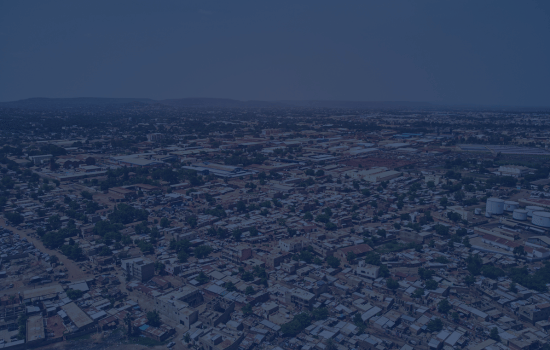
Bamako, the capital of Mali, located in the southwest of the country, has already been the victim of attacks by Islamic Jihad organizations in the past, in 2015 and 2024.[3] The current siege by the JNIM organization reflects a much greater ambition and capability on the part of the jihadists. In July of this year, coordinated attacks in southwest Mali marked a new stage in the southward expansion of the JNIM organization. [4]
Bamako is undoubtedly the most important city in Mali in terms of population, economy and politics. Its fall would have devastating consequences for the future of the country and the entire region. Bamako’s importance is not only demographic. All functions of the administrative centers are located there, including government offices, the national television station, and the international airport (Modibo Keita International Airport). With a population of 4.24 million in 2025, the Bamako metropolitan area is ten times larger than the country’s second largest city, Sikasso in the south, which has only about 300,000 inhabitants. Bamako also represents a significant part of the national economy. More than 90% of official businesses are located in the Bamako metropolitan area. [5] The capture of Bamako obviates the need to capture larger territories and could decide the fate of the bloody conflict in Mali.
Control of a capital city is often used as a de facto criterion for political recognition. For example, although Mobutu Sese Seko ruled Kinshasa in his later years, he continued to be recognized as the leader of Zaire until Laurent-Désiré Kabila captured the capital in May 1997. [6]
Capturing the capital was also a crucial step in resolving many civil wars in Africa. In 2011, the capture of Abidjan by forces loyal to Alassane Ouattara, France, and the United Nations brought an end to the Second Civil War in Ivory Coast. [7]
Would the capture of an African capital by jihadists from radical Islamic organizations, rather than conventional rebels, lead to external intervention by Western or African powers? That seems unlikely. Except its partners in the Alliance of Sahel States (AES), the Malian government is diplomatically isolated by choice. [8]
The Siege of Bamako
For weeks, the al-Qaeda-affiliated terrorist organization JNIM (Jama’at Nasr al-Islam wal Muslimin) has been imposing a heavy and effective siege on the Malian capital of Bamako, preventing all entry and supply of fuel and food to it. According to Western and African security sources, the organization is tightening its siege around the city, practically choking it of all critical essential supplies – while gradually advancing towards seizing power in the country.[9] In Bamako, the city has been suffering from severe shortages of fuel, food and other basic goods for weeks. The terrorist organization JNIM has been blocking the main roads and taking over tanker convoys coming from neighboring countries such as Ivory Coast, Senegal and Mauritania. Dozens of tankers have been attacked and burned on the roads, and the drivers have been kidnapped or murdered.
The siege has brought daily life in the city to a near standstill. Gas stations have been emptied and shut down, long lines stretch around dry pumps, and many are forced to wait days to get a few liters – if any. The price of a liter of fuel has jumped sharply, reaching about 2,000 CFA francs, equivalent to about 3.5 dollars. [10]
In the absence of fuel, the electricity supply is also collapsing. Power plants have been shut down, buses have stopped running, and many shops have closed their doors. The government was forced to cancel classes in all schools and universities, and the bustling streets of Bamako were almost completely empty.
Disruption of the Local Military’s Capabilities
The crisis is not only affecting civilians – the Malian military is also struggling to operate. According to local sources, army units have been ‘starved’ of fuel for weeks and have been left virtually unable to react or move, preventing them from responding to rebel attacks. To counter the jihadist advance, the army is required to carry out ground and air attacks, but vehicles and aircraft cannot operate due to the lack of fuel. [11]
The Spread of the JNIM Organization
By taking advantage of Mali’s reliance on land-based trade routes, its landlocked neighbors, and its complete reliance on energy imports, the JNIM devised its “siege strategy.” The intention was to weaken the government, impede economic activity, and increase instability.
JNIM has not been able to tighten its grip or take control of strategic areas – since its creation in March 2017 – without first exhausting the Malian army (FAMa) through ongoing fighting in the north and south.
By concentrating its attacks on military bases from which Malian army fighters have fled and seizing control of weapons depots, JNIM has simultaneously profited from substantial cash resources flowing to it through abduction for ransom operations and the acquisition/looting of advanced weapons.
The JNIM’s momentum grew after the withdrawal/expulsion/removal of the French Barkhane force,[12] and the removal of the American military presence from the countries of the region. The JNIM also managed to exhaust the Russian ‘Africa Corps’ and take advantage of the crisis that befell Mali following the international sanctions imposed on it following the military coup, sanctions that directly affected the operational capabilities of the army, in which three senior military commanders were dismissed last October, allegedly for their failure to stop the jihadist attacks. [13]
With effective control of northern Mali, the JNIM announced months ago its plan to pressure the regime and overthrow it. Since it could not conquer Bamako directly, it is now betting on economic warfare to ignite public anger against the rulers of the military junta. Most indicators and expert assessments confirm that the conquest of Bamako by the JNIM is extremely difficult without alliances with other armed groups, alliances that the JNIM knows it cannot achieve. This understanding has pushed the group to experiment with an economic blockade to pressure the regime, ignite public and institutional anger, and impose a new reality on the ground.
Dominant narratives often evoke the fear of a repeat of the 2012 scenario, when armed groups surged towards the capital Bamako and only direct French intervention as part of Operation Serval prevented the city from being taken. [14]
Why the State of Mali?
Beyond extremist ideology, several factors explain why the State of Mali has become a central target for the JNIM organization:
Strategic geopolitical position
Situated in the centre of the Sahel, Mali has porous borders and places where the government finds it difficult to enforce its rule.
Political fragility, exacerbated by repeated coups, creates fertile ground for the formation of armed groups. Cross-border corridors to Burkina Faso, Niger and Algeria facilitate the movement of arms, fighters and illicit funds, while the presence of foreign forces fuels the JNIM’s anti-Western rhetoric.
Main Economic Gambles
JNIM finances its activities through lucrative activities: taxes on transport and trade, ransom and patronage fees from local businesses and looting. These activities also make it possible for a nation with high rates of poverty and unemployment to recruit young people without jobs. Therefore, controlling local economic flows is both a tool for economic survival and a lever of power. [15]
Natural Resources as Strategic Leverage
Mali possesses desirable natural resources: artificial gold mines, agricultural corridors, and strategic transit points. Control over certain mining areas allows JNIM to exploit gold illegally and impose its authority on local populations. These resources become both a source of funding and a tool for territorial control.
Convergence of Factors
Political instability, poverty, abundant natural resources, and its geographical location make Mali an ideal territory for JNIM. Understanding this combination is essential for developing security and development strategies that go beyond a purely military response.
JNIM targets Mali not only for ideological reasons, but also because the country offers a lucrative strategic space where a weak state and abundant resources create fertile ground for terrorism.
The current escalation would not have been successful without attacks on fuel convoys coming in from Senegal, Guinea and Ivory Coast, with dozens of trucks set on fire. The group has also moved along the border with Mauritania and for the first time attacked itself in Nigeria – a sign that its sphere of operations is expanding and now extends beyond Mali. [16]
Russian Aid
Recently, the military junta in Bamako has tried to get additional aid from Russia. A delegation from the Russian Defense Ministry promised to provide 200,000 tons of oil and food – but so far, no change has been seen on the ground. Even the Russian fighters who were sent – mercenaries from the Africa Corps group – have not been able to stop the jihadists’ advance. The opposite is true: severe acts of revenge, at the level of ‘crimes against humanity’, by the Malian army and Russian mercenaries against uninvolved civilians have only expanded support for al-Qaeda in the rural areas. [17]
Mali’s failure is mostly explained by the collapse of Russian aid. After the military coup in recent years, Mali has moved closer to Russia, uniting its fate and political and security direction with its neighbors Niger and Burkina Faso by establishing the Alliance of Sahel States (AES), all three of which are led by unelected military juntas, and rely on Russia for security after they threw out the U.S. and French armies that helped fight the spread of radical Islamic terrorist organizations.
The Malian government, led by the junta headed by General Assimi Goïta, has remained almost completely isolated. It has severed ties with Western countries and the ‘Organization of West African States’ (ECOWAS), thus losing vital sources of aid. [18]
Western embassies, including those of the United States, France, Germany, and Italy, recently issued orders for their citizens to leave the country immediately due to the severe worsening in security and the risk of the collapse of the capital. [19]
Regional Impacts and Consequences
There is now growing concern that Mali will become the first country to be effectively controlled by the terrorist organization al-Qaeda. Given the difficult situation of Mali’s neighbors, especially Niger and Burkina Faso, there is a fear that this jihadist storm will escalate and sweep them away, as well.
Indeed, the dangers extend beyond Mali. The focus on Bamako obscures a broader regional reality. The jihadist spread is increasingly regional, threatening countries such as Burkina Faso, Niger, and the Gulf of Guinea. The crisis challenges the ability of the Sahel Alliance to offer real support and shape a regional strategy beyond promises of a joint force – which is likely to fail like its predecessors. Military solutions have failed to stop these rebellions. Negotiations, still rejected outright, remain an untested option that could address security crises that years of war have not resolved.
The situation in West Africa is so dire that on November 18, 2025 UN Secretary-General António Guterres reported to the UN Security Council “a moment of profound urgency” and the risk of a “disastrous domino effect” across West Africa and the Sahel, with the aim of finding sources of funding and building a joint mechanism to prevent Mali from falling into the hands of the JNIM, as well as the Lake Chad region. [20]
Possible Scenarios
The first scenario assumes a massive mobilization of the Malian armed forces, supported by the Sahel Alliance and most likely by Russian mercenaries from the African Union. This scenario requires the army to concentrate its efforts in the Bamako region and retake strategic routes.
This scenario doesn’t seem likely right now. The Malian army remains limited in strength, and so far, little fighting has occurred in urban areas. Cities like Timbuktu, Gao and Kidal were captured or liberated without a fight. The rebels and jihadists preferred to retreat as their opponents, the local army and Russian reinforcements, advanced.
The second scenario, arguably more realistic, would be some kind of negotiated political agreement between the Malian military authorities and the jihadists. A political agreement is clearly the only way to end a conflict that neither side can win militarily.
In recent months, calls for dialogue have increased. Religious, political, and economic leaders are contributing to these calls, although the issue is controversial. [21]Advocates of dialogue often cite examples of agreements reached through dialogue between Islamists and state actors elsewhere in the region, particularly in parts of the Maghreb.[22] However, these cases were shaped by very different traditions regarding the relationship between the state and Islam.
Such a political agreement would force the Malian authorities to abandon the principle of secularism enshrined in the constitution, something that all ruling elites, including the current leaders, have always refused. And given the jihadists’ position of power, the government will be forced to make concessions that will weaken its legitimacy.
However, if Bamako falls, a more publicized dialogue would be more likely. Managing such a large city, maintaining trade, and securing fuel supplies would require agreements with neighboring countries hostile to the jihadists. In such a case, the armed groups could be given more moderate authority as part of a pragmatic compromise. Among the figures who might lead or negotiate such a process is the often-mentioned imam Mahmoud Dicko, who is currently in exile. Even far from his country, he continues to influence Malian politics. [23]
The ultimate scenario is the fall of Bamako and a jihadist takeover. While entering the capital is now possible, establishing a unified and stable government will be much more difficult. The jihadist coalition is riddled with divisions, rivalries and divisions. Furthermore, it maintains a belligerent and bloody relationship with the Islamic State – Sahel Province (ISSP), which operates in eastern Mali.
If the jihadists were to occupy Bamako, it is likely that the Islamic State would certainly seek to be involved in the exercise of power at the national level. This could provoke conflicts between the two organizations, as we have seen in Somalia and Afghanistan.
Conclusion
In the worst-case situation, where the JNIM takes over Bamako and transforms the area, we will be watching for changes. This may be a far-fetched scenario, but it does not eliminate the real and ongoing threat posed by jihadist groups, the demands of the Tuareg rebels in AZWAD,[24] or the internal political crisis caused by the military regime’s abandonment of its democratic commitments.
[1] The group is led by Iyad Ag-Ghali, a Malian and ethnic Tuareg from Mali’s northern Kidal region who founded Ansar Dine in 2012. That group’s stated aim was to impose its interpretation of Islamic law across Mali. Ghali had previously led Tuareg uprisings against the Malian government, which is traditionally dominated by the majority Bambara ethnic group, in the early 1990s, demanding the creation of a sovereign country called Azawad. However, he reformed his image by acting as a negotiator between the government and the rebels. In 2008, he was posted as a Malian diplomat to Saudi Arabia under the government of Malian President Amadou Toumani Toure. When another rebellion began in 2012, however, Ghali sought a leadership role with the rebels but was rebuffed, leading him to create Ansar Dine.
[2] JNIM, an Islamist coalition affiliated with al-Qaeda, has been designated a terrorist organization by several countries, including the United States, the United Kingdom, Australia, and Canada. The organization, which operates primarily in Mali, Burkina Faso, and Niger, has become one of the deadliest militant groups in Africa. JNIM is the Sahel affiliate of al-Qaeda and the most active armed group in the region, according to conflict monitor ACLED. The group was formed in 2017 as a merger between groups that were formerly active against French and Malian forces that were first deployed during an armed rebellion in northern Mali in 2012. They include Algeria-based al-Qaeda in the Maghreb (AQIM) and three Malian armed groups – Ansar Dine, Al-Murabitun and Katiba Macina. JNIM’s main aim is to capture and control territory and to expel Western influences in its region of control. Some analysts suggest that JNIM may be seeking to control major capitals and, ultimately, to govern the country as a whole. It is unclear how many fighters the group has. Estimations vary around 6,000 fighters.
[3] The Radisson Blu attack in Bamako was a terrorist attack that occurred on November 20, 2015. During the attack, 20 people were killed and about 170 hostages were taken at the Radisson Blu Hotel in Bamako, the capital of Mali. The attack was carried out jointly by the Tunisian terrorist organization Al-Mourabitoun and al-Qaeda in the Islamic Maghreb. Deadly Mali hotel attack: ‘They were shooting at anything that moved’; https://edition.cnn.com/2015/11/20/africa/mali-shooting; On September 17, 2024, gunmen from a cell of the Jamaat Nasr al-Islam wal-Muslimeen (JNIM) attacked several locations around Bamako, the capital of Mali, including Malian and Wagner Group military bases and Modibo Keita International Airport. About 100 Malian soldiers and police were killed and more than 255 others were wounded. Al-Qaeda-linked group says it was behind Mali attack https://www.bbc.com/news/articles/ce8d996x1r0o
[4] The JNIM has besieged Ouagadougou, the capital of Burkina Faso, and, together with the ISSP, controls about 50% of the country outside the capital. Recently, the JNIM has launched attacks in northern Niger along the border with Algeria and as far as Benin, demonstrates ambitions to dominate the Trans-Sahelian corridor reflecting historical Islamic policies.
[5] The claim that 90% of formal businesses are located in Bamako is a common estimate that highlights the economic concentration of the Malian capital, although 100% accurate official statistics are difficult to find, as the data vary depending on the source (labor exchange, chamber of commerce), but they converge on an overwhelming dominance of Bamako, where most of the company registrations, headquarters, and official economic activities in Mali are located.
[6] Comparative Lessons in Authority and Control: Jeffrey Herbst, States and Power in Africa Princeton University Press (December 21, 2014).
[7] The Second Ivorian Civil War (2010–2011) was a post-election crisis resulting from Laurent Gbagbo’s refusal to accept his defeat by Alassane Ouattara in the 2010 presidential election. This crisis led to violent clashes In Abidjan and across the country, which pitted forces loyal to Gbagbo against his supporters, culminating in the intervention of the UN and French forces, which led to Gbagbo’s arrest and the inauguration of Ouattara in 2011. This crisis followed a first civil war that began in 2002.
[8] The “Alliance of the Sahel States” (AES) between the three countries (Mali, Burkina Faso and Niger) was signed in September 2023. There is no indication that the new alliance will have much to offer. In Mali, the government is fighting on three fronts. In Niger, we have seen the number of attacks spiral out of control since the withdrawal of French forces. Burkina Faso, which is the second most affected country by terrorism according to the Global Terrorism Index, is also fighting to hold on to the relatively small territory it has or has left – each of the three countries is busy addressing internal challenges that are often large and beyond its capabilities. The three countries lack the capacity and infrastructure to complete their mission of eradicating radical Islamic terrorism. They do not have sufficient funding; the three countries do not have a sustainable economic model to sustain their goal. In addition, they do not have enough goodwill from the local population and other local actors to deal with the challenges and violent extremism of Islamic terrorist organizations. The three countries remain suspended from the ECOWAS (The Economic Community of West African States) regional bloc and relations have deteriorated for months. These countries should prioritize restoring relations with ECOWAS to gain access to the global support needed to effectively combat the spread of radical Islamic terrorist organizations and restore security to their citizens.
[9] Mali Under Siege: Tracking the Fuel Blockade Crippling Bamako https://www.bellingcat.com/news/2025/12/03/mali-under-siege-tracking-the-fuel-blockade-crippling-bamako/
[10] According to the JNIM group led by Iyad Ajali, the siege of the capital Bamako is in retaliation for Malian authorities’ ban on selling fuel outside gas stations in rural areas, where it is usually transported and sold in jerrycans. Authorities say the move is aimed at cutting off the jihadists’ supply lines.
[11] In Mali as in Burkina Faso as well, military commanders had grown frustrated with the weak leadership elected presidents were providing in the campaign against Islamist insurgents. In both countries, troops had repeatedly suffered brutal losses while their civilian governments appeared incapable of mobilizing the extra weapons or sometimes even food and wages to the troops.
[12] Operation Barkan was a major French military counter-terrorism mission in the Sahel region (Mali, Niger, Chad, Burkina Faso, Mauritania) from 2014 to 2022, continuing Operation Serval in combating jihadist groups such as al-Qaeda affiliates, supporting local armies and fostering regional security, but ultimately failing to stop the insurgency, leading to political tensions, anti-French sentiment, Russian influence and France’s withdrawal from Mali in 2022.
[13] Le Mali limoge des hauts gradés de l’armée, en difficulté sur le terrain face aux jihadistes https://www.rfi.fr/fr/afrique/20251023-le-mali-limoge-des-hauts-grad%C3%A9s-de-l-arm%C3%A9e-en-difficult%C3%A9-sur-le-terrain-face-aux-jihadistes
[14] ‘Operation Serval’ was the French military intervention in Mali in 2013. The French military involvement began at the request of the Malian government and under a UN mandate, with the aim of halting the advance of extremist Islamist groups (linked to Al-Qaeda) from northern Mali towards the capital, Bamako, successfully pushing them back and restoring Malian control over key areas. Named after an African wildcat, the operation involved fast-moving French air and ground forces, which quickly deployed thousands of troops and aircraft to halt the offensive, secure the capital and dismantle strongholds. Terrorism, paving the way for elections and a transition to a long-term stabilization mission (Operation Barkhane).
[15] Fuel trafficking, motorcycle trafficking, drug smuggling, extortion of livestock farmers and trucks… The JNIM organization has gradually become a major player and benefits significantly from the trade that takes place in its areas of influence, which are mainly divided between Mali, Burkina Faso and Niger. Between 60 and 70% of Burkina Faso is under jihadist control, and large areas of Mali remain outside state control, according to several studies.
[16] Among the strategic road networks that the JNIM controls are the cross-border corridors of the W-Arly-Pendjari complex, a nature reserve that extends across Burkina Faso, Niger and Benin.
[17] The Russian presence on the African continent is designed to increase Russia’s control and influence on the continent. Russian forces are accused of committing horrific crimes against the civilian population in many African countries. Africa Corps mercenaries are committing massacres, murders, rapes, and other serious crimes against the civilian population in Africa, in what sometimes appears to be a deliberate tactic to increase their control.
[18] The real threat may lie elsewhere: internal elements dissatisfied with the current regime could exploit the crisis to overthrow the president. Signs of internal friction are growing, including a recent failed coup attempt, the arrests of dozens of Malian soldiers and security officers, and the arrest of a French citizen accused of brokering with French intelligence. The regime recognizes the seriousness of these threats, and experts warn that any coup or state collapse would further empower rebel groups. See: Malian Soldiers, including 2 Generals, Arrested in Alleged Coup Plot; https://adf-magazine.com/2025/09/malian-soldiers-including-2-generals-arrested-in-alleged-coup-plot/
[19] US warns citizens in Mali to leave country immediately https://www.reuters.com/world/africa/us-warns-citizens-mali-leave-country-immediately-2025-10-28/; France advises citizens to leave Mali urgently amid jihadist fuel blockade https://www.bbc.com/news/articles/clykx22x5deo
[20] Secretary-General’s remarks to the Security Council – on Enhancing Regional Counter-Terrorism Cooperation in West Africa and the Sahel https://www.un.org/sg/en/content/sg/statements/2025-11-18/secretary-generals-remarks-the-security-council-enhancing-regional-counter-terrorism-cooperation-west-africa-and-the-sahel
[21] Dialogue doctrinal : Une piste pour la réconciliation nationale ? https://www.journaldumali.com/dialogue-doctrinal-une-piste-pour-la-reconciliation-nationale/
[22] The dialogue between Islamists and state actors varies greatly: it ranges from political negotiations and institutional integration (as in Turkey or Tunisia with Ennahdha, or historically in Morocco) to military confrontation (Syria, Iraq, Sahel, northeast Nigeria), including deradicalization processes or attempts at indirect dialogue, often complicated by regional divisions (Sahel) and global security dynamics (proxy wars). In the Maghreb, the paths are different: Morocco has historically sought to integrate the Justice and Development Party (PJD), Algeria maintains a hard line, while Tunisia saw Ennahda become a major political player before its relations with the state deteriorated sharply.
[23] Mahmoud Dicko, l’imam qui fait peur aux putschistes maliens https://www.lemonde.fr/afrique/article/2025/04/15/mahmoud-dicko-l-imam-qui-fait-peur-aux-putschistes-maliens_6596193_3212.html
[24] The main objective of the National Movement for the Liberation of Azawad (MNLA) has consistently been to achieve independence or significant autonomy for the northern region they call “Azawad”, a region that has been consistently marginalized by the central government in Bamako. The main objective is to establish a secular and independent state of Azawad that would include the regions of Kidal, Gao and Timbuktu.