The Sahel is the Epicenter of Jihadist Expansion in Africa
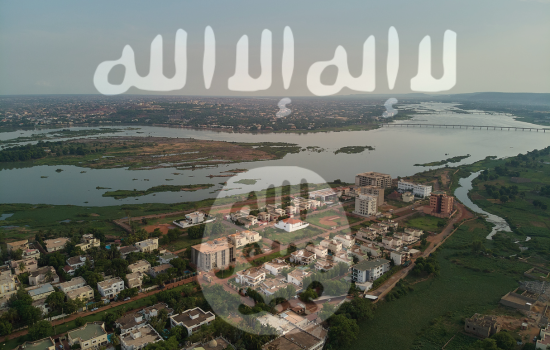
Is Africa the next caliphate? Today, the question is more specific and focused: will the caliphate be established in Mali, where JNIM jihadists have laid siege to the capital, Bamako, and the United States, France, and other Western countries are advising their citizens to leave the country as soon as possible?
The answer to this question is both simple and complex. In Africa, and especially in the Sahel, all the conditions exist for the implementation of what the jihadists have been seeking for several years, namely a caliphate.
There is no doubt that the heart or focus of the spread and expansion of radical Islamic organizations is clearly the Sahel countries. A brief review of the past ten years reveals a wide range of factors that, in various ways and to varying degrees, contributed to the growth of radical Islamic groups whose goal is to establish an Islamic caliphate governed by Sharia law.
Everyone can see that radical Islamic groups are currently making an effort to spread throughout West Africa and the Gulf of Guinea nations of Benin, Togo, Nigeria, Ghana, and Senegal. In any case, the Sahel remains the focus due to several very favorable conditions for the spread and development of these extremist organizations and because huge areas of the state of Mali and Burkina Faso are already under their complete control.
The tri-border region of Benin, Niger, and Nigeria faces the rise of armed groups
The escalation of armed violence in certain border areas in West Africa is changing the regional security balance. Jihadist movements, previously limited to the Sahel region, are now gradually launching incursions into coastal countries. This development is clearly highlighted in observations published by the ACLED organization, which monitors conflicts around the world, and paves the way for a renewed understanding of the situation.[1]
According to the ACLED organization, the regions that border Benin, Niger, and Nigeria are gradually becoming a strategic point for armed groups from the Sahel and areas of northern Nigeria. The JNIM (Group for the Support of Islam and Muslims) and ISGS (The Islamic State in the Greater Sahara) are strengthening their presence there, creating a territorial network connecting previously isolated areas. In contrast to the irregular intrusions seen in the past, this dynamic is causing violence against the littoral nations to spread in a more coordinated manner.
Northern Benin reflects this trend. ACLED notes that 2025 was the deadliest year in the region, with a significant increase in deaths compared to 2024. In this context, northern Benin, which borders Burkina Faso, Niger, and Nigeria, experienced its deadliest year ever, with an increase of almost 70% in deaths compared to the first eleven months of 2024. This deterioration in security was significantly characterized by the attack last April in the W National Park in the north of the country, during which more than 50 soldiers were killed.
Additionally, he points out that the advanced relationship between Sahelian networks and Nigerian organizations is making the triangle border region a strategic location for jihadists and establishing a continuous corridor of violence from Mali to western Nigeria.
Violence and migration towards the coastal states
According to the organization ACLED, the creation of a corridor of violence connecting Benin, Niger, and Nigeria represents a significant change in the development of conflicts. The organization notes that this area is now attracting both Sahelian groups and their Nigerian counterparts, who use it as a transit area, refuge, or base for their operations. This new configuration constitutes a structured system of violent activities that coastal states must now integrate into their security strategies.
The future of Mali?
It is evident that Mali is on the jihadist agenda as the nation most likely to develop into a fresh, fertile area for the creation of a caliphate in the upcoming weeks, months, or even years. Why? Simply because it is isolated in Mako, landlocked, far from France and in constant tension with its Algerian neighbor. Furthermore, its partners and allies in the Alliance of Sahel States (AES), Burkina Faso and Niger, each face serious internal difficulties both in combating the spread of Islamic terrorist organizations and in the social and economic spheres, and are not really in a position to effectively assist the Malian state in providing assistance to curb the spread of radical Islamic organizations.
As for Russia, the 2,000 or 3,000 mercenaries of the Africa Corps are not capable of making the desired change, something that France and the US failed to do in the framework of Operation Barkhane and the Takuba force. The Russian mercenaries, despite their great cruelty, are completely helpless against the jihadist insurgency.
In my opinion, the military approach is doomed to failure in any case. This approach will require the use of all domestic resources, with assistance from Russia, to restore security and public order at the cost of a bloodbath among the uninvolved, deepening social divisions in a country where tribal loyalty prevails over everything.
The Malian Armed Forces (FAMa) are currently too weak and isolated to be able to both oppose and retake the areas of the country that are under the control of Islamic terror groups, primarily the JNIM. Military failure is guaranteed in advance.
Today, the capital of Mali, Bamako, could fall to the JNIM.[2] There is little doubt that in recent years, the JNIM has developed a real strategy, so to speak, to isolate Bamako geographically and to isolate the social and political power structure, which has limited influence. Without a doubt, the group now aims to economically isolate it and incite dissatisfaction among its citizens against the existing government.
Will all these conditions lead the Malian army in Bamako to think that there is no way out? Or will they believe that they can live with it?
As of right now, JNIM is essentially unable to seize Bamako in the military meaning of the word. JNIM has always sought out what can be called political, military, and religious partners to open the doors of Bamako to them. That is, to negotiate partnerships with the JNIM in what might be referred to as a combined administration of the capital and the state of Mali, and to make sure that the reigning military junta vanishes from within.
Salafi Imam Mahmoud Dicko
In the not-so-distant past, there was Imam Mahmoud Dicko who could have filled this role. He himself founded the CMAS movement – “Coordination of Movements, Associations and Supporters of Imam Dicko” (La Coordination des mouvements, associations et sympathisants), a kind of coordinating body for civil and religious movements that encouraged dialogue until 2019 and 2020. Beginning in 2022, he has been pursued by Bamako’s ruling army. General Assimi Goïta’s military junta seeks to consolidate its control and eradicate any threats to its rule, whether they be politicians or other military factions. He is currently in exile in Algeria. But this is precisely the figure that jihadist groups are looking for: religious, political, and even military figures who could serve as bridges to open doors in Bamako.
Main reasons why JNIM might be open to dialogue with a figure like Dicko or a government he heads:
1. Political concessions: Some JNIM members have explicitly called for Dicko to return so that they can negotiate with him rather than with the current regime, suggesting the potential for a mutually agreed-upon political settlement.
2. Shared ideological ground (to some extent): While the specifics of implementing Sharia law may differ (al-Qaeda principles versus local interpretations), Imam Dicko’s figure may represent an influential internal voice that is not entirely opposed to the introduction of some form of Sharia, providing potential common ground that the current government does not offer.
3. Legitimacy and support: JNIM has been able to expand its influence by presenting itself as a champion of community support and an alternative to the corrupt and distant government in Bamako. Negotiating with a respected local figure like Dicko would likely be a strategic move to gain additional local legitimacy and support for their goal of establishing an Islamic state.
4. Government weakness: JNIM engages in economic warfare and exploits the government’s inability to provide basic services and security, creating a power vacuum and public anger that strengthens JNIM’s position in demanding political change.
However, it is important to note that JNIM leader Iyad Ag Ghaly is smart enough to know that working with other groups could pose a threat to his ultimate authority.
JNIM’s primary goal remains to impose a strict interpretation of Islamic law and reject the authority of the current Sahel governments.
The sectarian/ethnic factor
Socially, the jihadists in the Sahel are mostly Arabs and Tuareg; they are a minority in the capital city of Bamako, a fact that will not make it easier for them if they capture it. In other words, the ethnic and communal dimension at play cannot be ignored, but at the same time, there is past experience, namely the military conquest of a city, or even its complete takeover. It is likely that JNIM closely followed what happened with the Islamic State group in Sirte, Libya. Its capture immediately created an international coalition to drive the Islamic State group from the city in 2014 and 2015.[3]
Therefore, there is the idea that JNIM does not want to be seen as a radical political project that will impose itself on society, but rather as a political and religious alternative that society would be willing to support. For several years, JNIM has, in a sense, controlled several regions, and in Bamako, it is a kind of showcase. Entering Bamako by force could provoke reactions that are completely contrary to its agenda.
As for regional and international implications, the neighboring countries are undoubtedly a target for the expansion of Islamic terrorist organizations. However, the lessons of the Middle East in the context of significant foreign intervention teach, at least according to the recent experience in Iraq, in the war against al-Qaeda and later against ISIS, that it has cultivated a real hatred towards the West and its allies. At this time, this is not the case in the Sahel.
However, it is not impossible that if a caliphate is established in the Sahel, it will serve as a base for certain radical groups, which, supposedly, will abandon the JNIM and seek to exploit the weaknesses of a caliphate-based government to attack the West.
[1] Africa Overview: December 2025 https://acleddata.com/update/africa-overview-december-2025
[2] Following the siege of the city, fuel supplies experienced a slight slowdown during the week of December 8-14, causing queues at gas stations in some areas. In a statement issued on December 18, the Crisis Coordination and Management Center (CECOGEC) announced the resumption of regular fuel tanker convoys, thanks to the determination of the security forces and the army.
From: The DGCC reassures about the fuel shortage in Bamako https://nouvelhorizonmalinews.com/2025/12/17/la-dgcc-rassure-quant-a-la-penurie-de-carburant-a-bamako/
[3] The occupation of Sirte and the surrounding area ended a period of nearly two years during which ISIS managed to establish a territorial area of control in Libya with governance over a large population, the only one of its kind outside of Iraq and Syria. The occupation of the city of Sirte took place on February 18, 2015, when several hundred operatives who arrived by surprise in SUVs took control of the city of Sirte (Gaddafi’s birthplace) almost without fighting. During the period in which ISIS controlled Sirte and the surrounding area (about 260 km along the Libyan coast), the organization established itself and built civilian, military, and government infrastructures, which served as a springboard for terrorist activity. and guerrillas, in other areas of Libya and other North African countries. ISIS’s consolidation in the Sirte region occurred in the period following its successes in Iraq and Syria (2014), while the loss of Sirte occurred during a period of continuous “shrinkage” of ISIS’s territories of control in both Iraq and Syria. From: Implications of the Loss of the Sirte Region on ISIS’s Status in Libya and the Character of the “Islamic State” (Initial Assessment). https://www.terrorism-info.org.il/he/21113/